With its vibrant yellow blooms and delicate, fern-like foliage, Plains Coreopsis (Coreopsis tinctoria) is a stunning wildflower that brings a burst of sunshine to gardens and landscapes. Known for its resilience and cheerful disposition, this native North American wildflower has become a favorite among gardeners and pollinators alike. In this article, we will explore the captivating beauty, growth habits, and cultivation tips for Plains Coreopsis.
Appearance and Features:
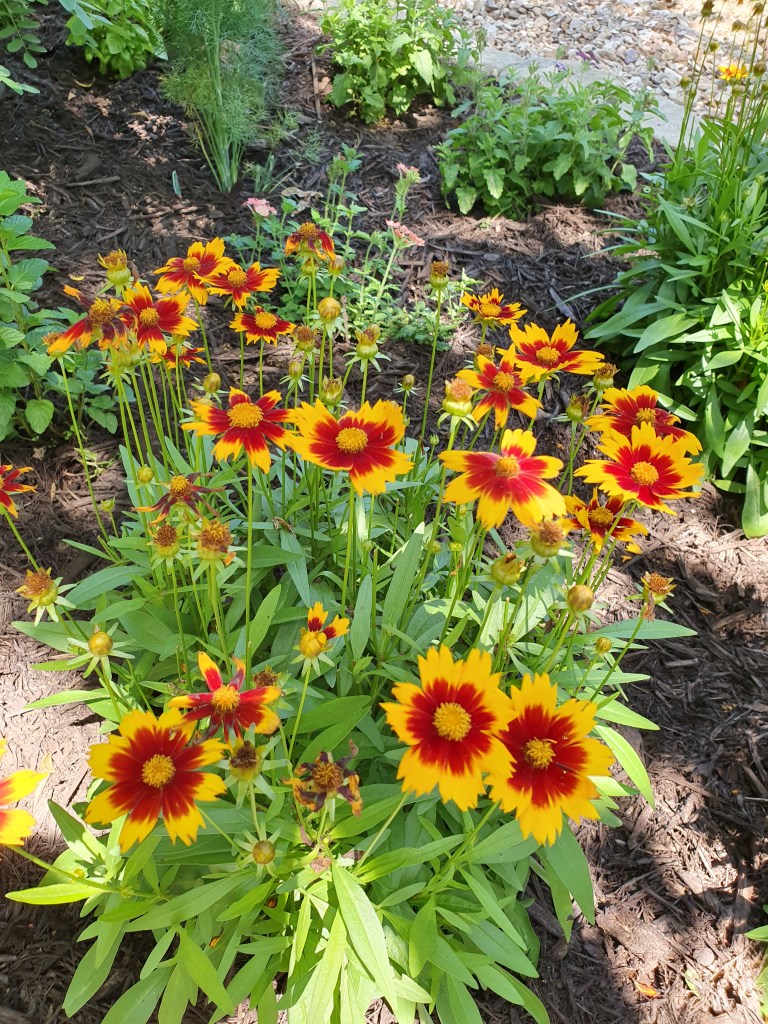
Plains Coreopsis is a perennial wildflower that typically reaches a height of 1 to 3 feet (30 to 90 cm) and forms clumps of slender stems. The fern-like leaves are deeply lobed and alternate along the stem, giving the plant an airy and graceful appearance. The real showstopper, however, is the abundant display of daisy-like flowers with bright yellow petals and deep red or maroon centers. The flowers bloom profusely throughout the summer, attracting bees, butterflies, and other pollinators to the garden.
Growth and Habitat:
Plains Coreopsis is native to North America and thrives in various regions and soil types. It is commonly found in prairies, meadows, and open fields, but it can adapt to different growing conditions. This versatile wildflower is particularly well-suited for xeriscapes and naturalized areas, as it is drought-tolerant and requires minimal maintenance once established.
Cultivation and Care:
Plains Coreopsis is a relatively easy plant to grow, making it suitable for both experienced gardeners and beginners. Here are some key tips for cultivating and caring for Plains Coreopsis:
- Sunlight: Choose a sunny location for planting, as Plains Coreopsis thrives in full sun. It requires at least six hours of direct sunlight per day to produce abundant blooms.
- Soil and Watering: Plains Coreopsis prefers well-draining soil but can tolerate a wide range of soil conditions. It is drought-tolerant once established, but regular watering during dry spells can help promote healthy growth and flowering.
- Planting: Sow the seeds directly in the garden after the last frost date in your area. Loosen the soil, scatter the seeds, and lightly press them into the soil surface. Keep the soil moist until the seedlings emerge, which typically takes 10 to 14 days.
- Maintenance: Once established, Plains Coreopsis requires minimal maintenance. Deadhead the spent flowers regularly to encourage continuous blooming and prevent self-seeding. However, if you want to encourage self-seeding and naturalize the area, leave some spent flowers to develop seedheads.
- Division and Propagation: Every few years, consider dividing the clumps of Plains Coreopsis to promote healthier growth. Divide the plants in early spring or fall by gently separating the root system and replanting the divisions in well-prepared soil.
Conclusion:
Plains Coreopsis is a delightful wildflower that brings a vibrant burst of yellow to gardens, landscapes, and naturalized areas. Its cheerful blooms and delicate foliage make it a favorite among pollinators and garden enthusiasts. With its easy cultivation and low-maintenance requirements, Plains Coreopsis is an excellent choice for adding color and charm to any garden, while also benefiting local wildlife. Embrace the beauty of this native wildflower and enjoy the sunshine it brings to your outdoor spaces.
 Nature, Science, Art, Music et al
Leave a comment