I had the privilege of visiting the Firelei Báez exhibition at the Momentary Art Museum and was blown away by the artist’s powerful and thought-provoking work. Báez is a contemporary artist who was born in the Dominican Republic and currently resides in New York City. Her work explores themes of identity, race, and cultural heritage, often incorporating elements of history, mythology, and Afro-Caribbean iconography.
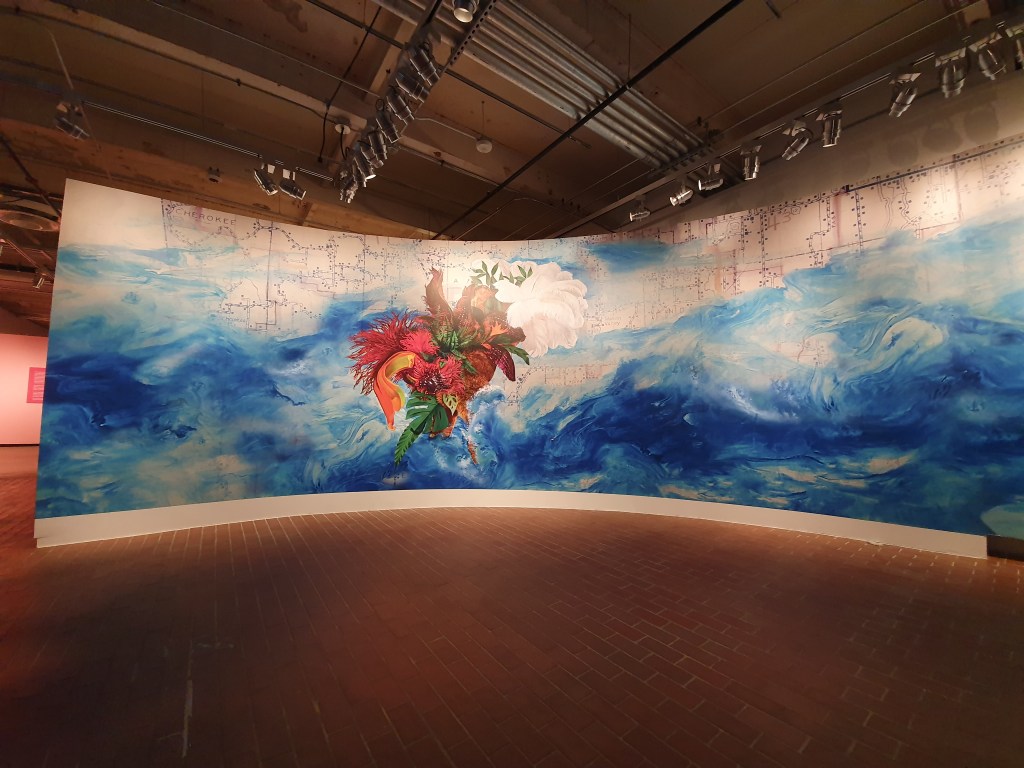
One of the most striking pieces in the exhibition was the “To Breathe Full and Free” sculpture, which features a large-scale, three-dimensional representation of a human lung. The sculpture is made up of intricate, lace-like patterns that are reminiscent of the traditional textiles and crafts of the Caribbean. The piece is suspended from the ceiling and is illuminated from within, creating a striking visual effect that draws the viewer in.
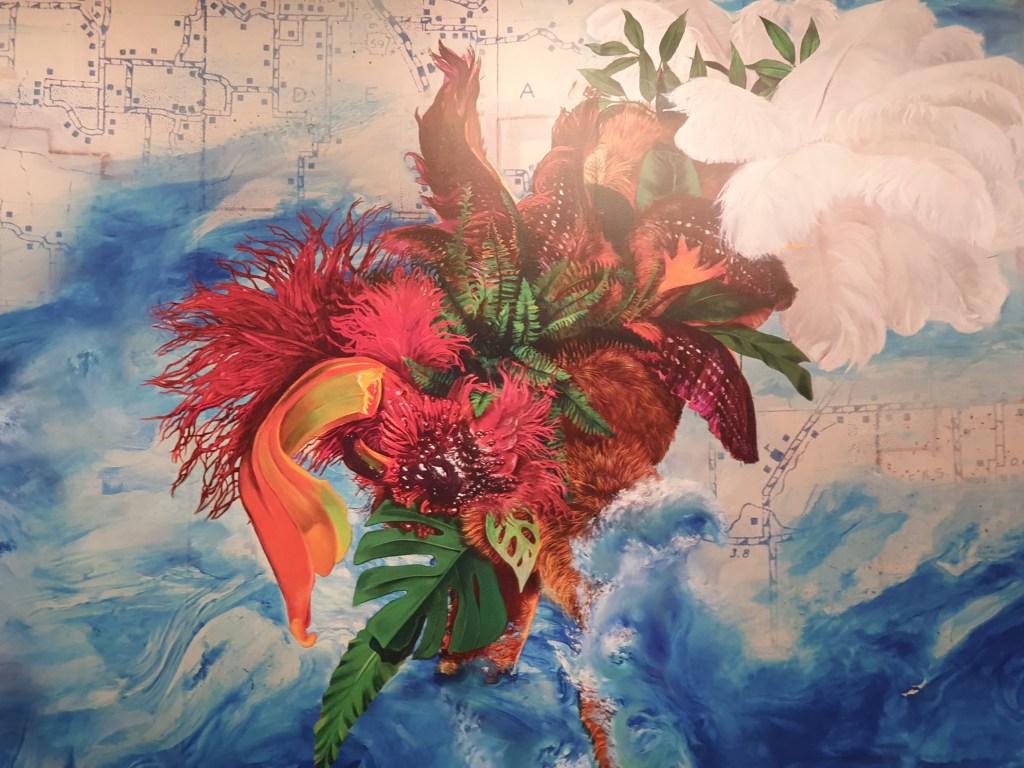
The “To Breathe Full and Free” sculpture is a powerful statement about the importance of breath and the struggle for freedom. The title of the piece is taken from a speech given by Frederick Douglass in 1857, in which he stated, “To breathe the air, and feel the sun, is glorious. When you breathe in this air, you breathe in the spirit of freedom. To breathe full and free, is to live.”
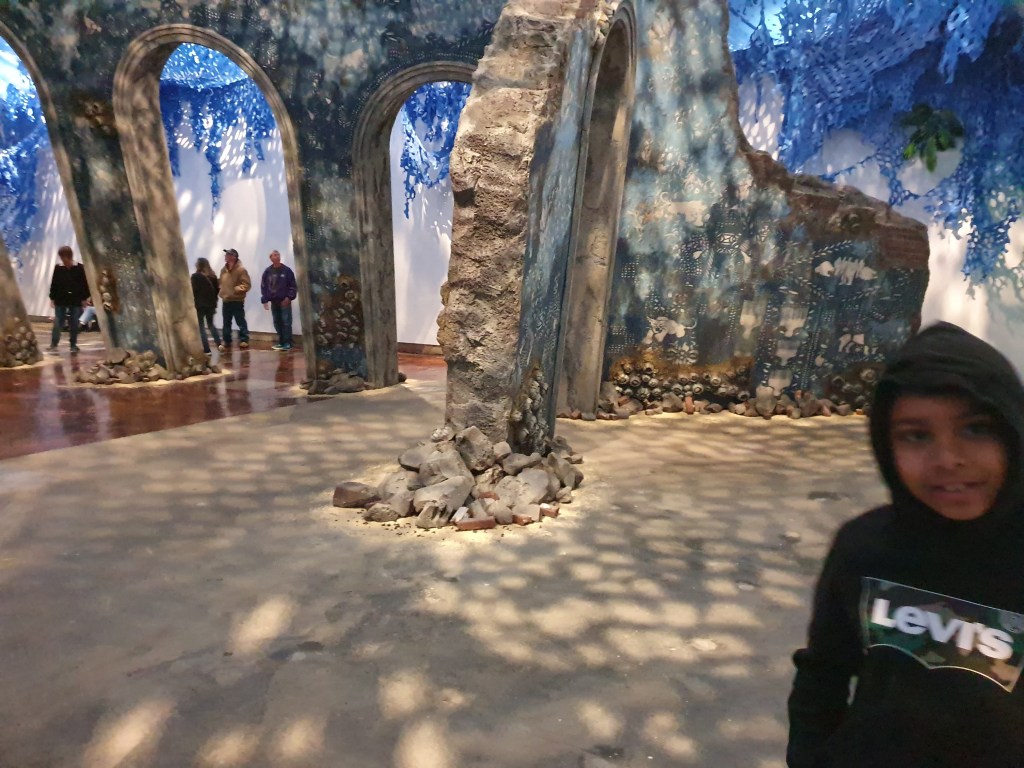
In light of recent events, such as the murder of George Floyd and the subsequent global protests against police brutality and racism, the “To Breathe Full and Free” sculpture takes on even greater significance. It serves as a reminder of the ongoing struggle for racial justice and the importance of breathing, both literally and metaphorically.
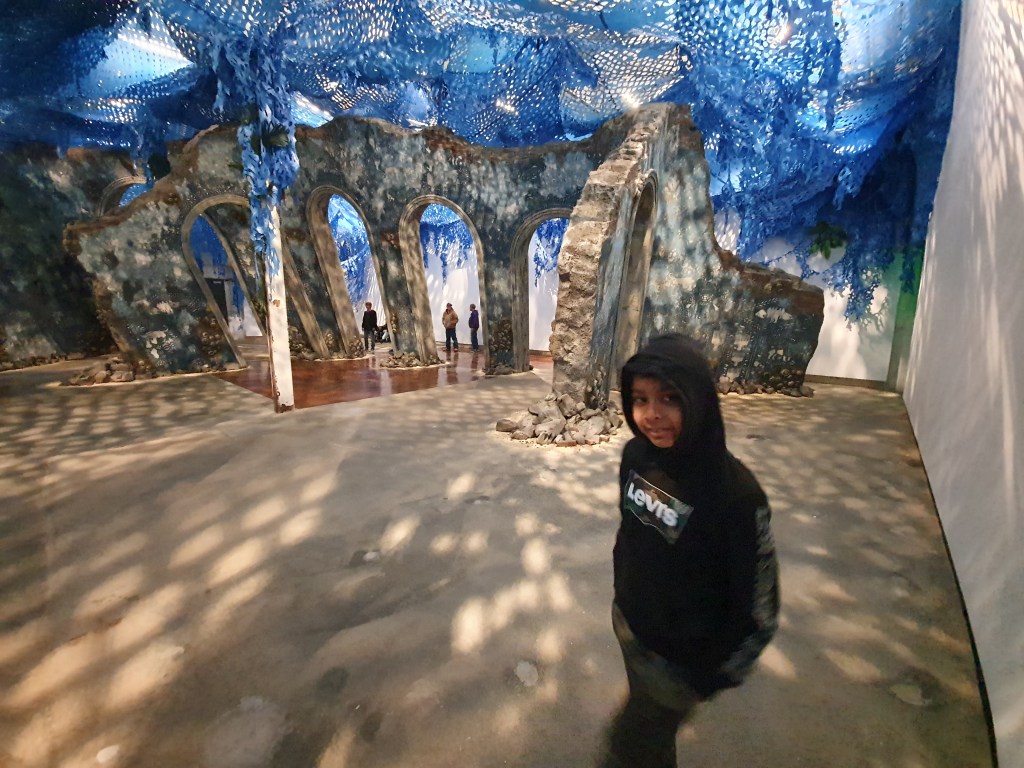
Throughout the exhibition, Báez’s use of color, pattern, and texture is striking. Many of her paintings feature vibrant colors and intricate patterns that are inspired by traditional Caribbean textiles and crafts. These patterns are often layered and combined with images of historical figures, such as Queen Nanny of the Maroons, a Jamaican national hero who fought against British colonialism in the 18th century.
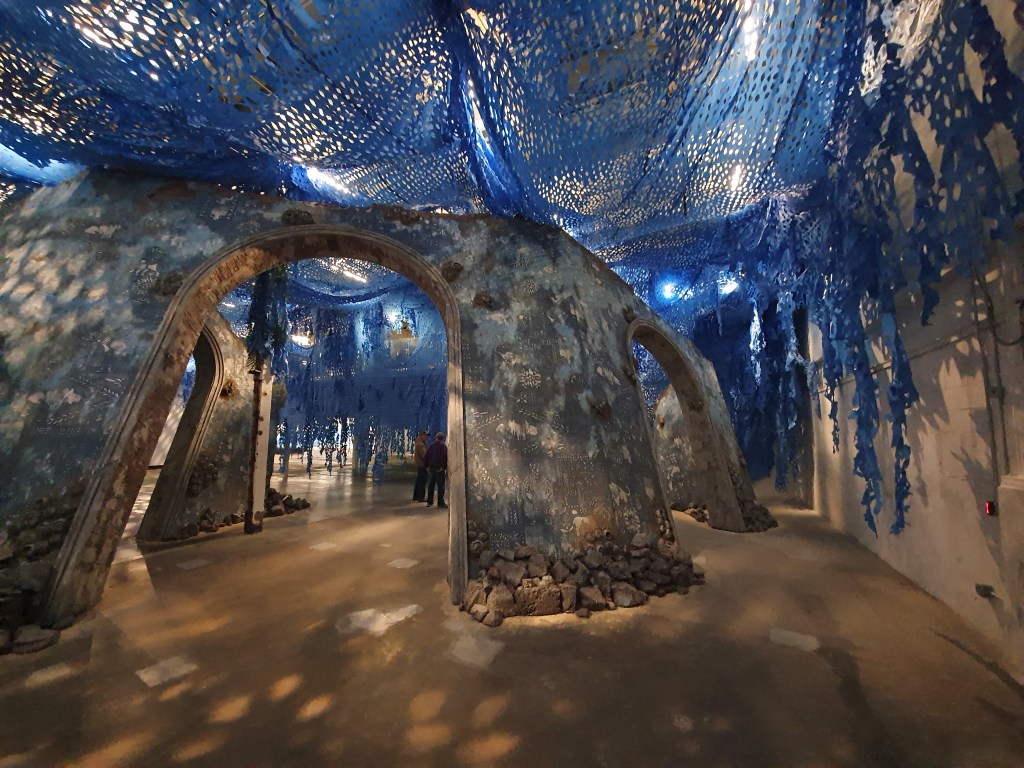
Báez’s work also explores themes of diaspora and cultural identity. Many of her paintings feature images of black women with natural hair and dark skin, challenging traditional Western beauty standards and celebrating the beauty of blackness. The inclusion of Afro-Caribbean iconography and mythology further emphasizes the importance of cultural heritage and the connection between past and present.
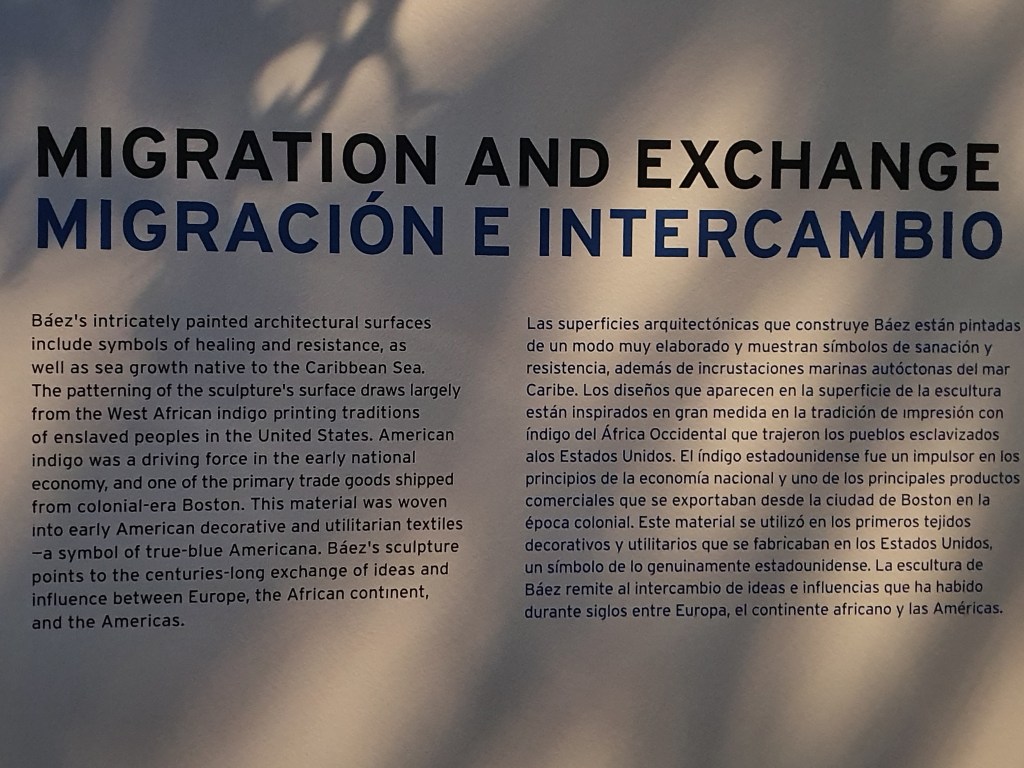
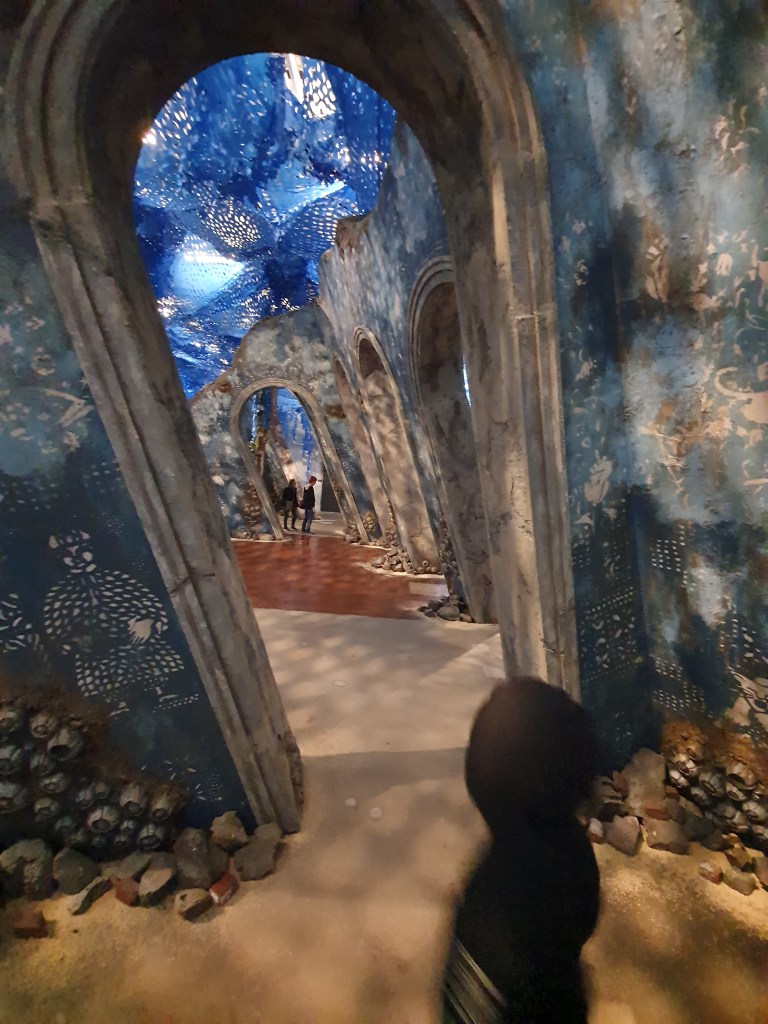
One of the most impressive aspects of Báez’s work is her attention to detail. Many of her paintings feature intricate patterns and textures that are created through the use of mixed media, including acrylic paint, ink, and collage. These details draw the viewer in and encourage them to take a closer look at the work, revealing new layers of meaning and symbolism.
Overall, my experience visiting the Firelei Báez exhibition at the Momentary Art Museum was a truly memorable and impactful one. Báez’s work is powerful, thought-provoking, and visually stunning, and her use of color, pattern, and texture adds a unique and dynamic quality to her paintings. Through her work, Báez is able to comment on important issues related to identity, race, and cultural heritage, making her an artist to watch in the contemporary art world.

 Nature, Science, Art, Music et al
Leave a comment